Love Your Life

Fiber-Rich Foods: Why They Matter More Than You Think
Kayla | FEB 3

Do You Experience Any of This?
Bloating that seems random
Energy crashes after meals
Cravings that feel reactive
Skin flares that come and go
Feeling full, but not satisfied
Or hungry again shortly after eating
If yes, fiber might be worth paying attention to.
I know – it can feel like one more thing to think about.
Most people already focus on:
Protein
Calories
Carbs
Workouts
Fiber might not be the first thing that comes to mind.
But it influences how all of those things behave in your body.
Why I Started Caring About Fiber
My interest didn’t start with tracking grams.
It started with curiosity about the gut microbiome.
Last year I was experiencing bloating and a general sense that digestion felt off. Nothing extreme – just enough to notice.
Because I practice yoga consistently, I’m used to paying attention to subtle shifts in my body.
So I started asking simple questions:
How diverse are the plants I’m eating each week?
Am I rotating enough fiber sources?
I began paying attention to plant variety – lentils one week, barley the next, more berries, more seeds.
From there, I started learning more about how fiber affects blood sugar regulation. That piece really caught my attention.
Because stable blood sugar supports:
More consistent energy
Fewer cravings
Better metabolic health over time
That felt practical and relevant.
Why Even Think About Fiber?
Fiber isn’t about restriction.
It’s about structure.
Fiber influences:
Blood sugar regulation
Microbiome diversity
Digestive rhythm
Immune function
Satiety
LDL cholesterol levels
It slows digestion.
It helps carbohydrates absorb more gradually.
It feeds beneficial gut bacteria that influence immune and metabolic signaling.
Most people under-consume fiber – not intentionally, but because modern eating patterns lean refined.
White grains instead of whole.
Juice instead of whole fruit.
Protein without plants.
Fiber becomes the missing structural piece.
Why Blood Sugar Regulation Matters
Even if you are not diabetic, blood sugar stability matters.
Frequent spikes and crashes can influence:
Energy levels
Mood
Cravings
Fat storage
Long-term metabolic risk
Fiber acts as a buffer.
It slows the rate at which glucose enters the bloodstream, leading to steadier energy and better insulin response over time.
It’s not about cutting carbohydrates.
It’s about pairing them intelligently.
For example:
Plain yogurt on its own contains no fiber.
Add chia seeds, and now you've created a meal with meaningful fiber.
What rice alone digests quickly.
Pair it with black beans, and the fiber changes how your body responds.
The goal isn't perfection.
It's thoughtful pairing.
Why Microbiome Diversity Matters
Your gut microbiome influences:
Immune signaling
Inflammation levels
Nutrient absorption
Short-chain fatty acid production
Metabolic health
Different fibers feed different bacterial strains.
That’s why variety matters.
Not just “more fiber.”
But diverse fiber sources across the week.
Legumes.
Whole grains.
Seeds.
Fruits.
Vegetables.
When I rotate these intentionally, I’m supporting a more resilient internal system.
Where Yoga Fits In
Yoga trains regulation.
You learn to steady your breath.
You build strength gradually
You increase capacity without overwhelming your system.
Nutrition follows the same principle.
Fiber changes how quickly carbohydrates are absorbed.
It helps stabilize energy.
It supports gut bacteria that influence immune and metabolic function.
That's what interested me.
Not trends.
Not extremes.
Just strengthening foundations.
How to Start
You don’t need to overhaul your diet.
Start simple:
Add a fiber-rich fruit daily
Include vegetables at most meals
Rotate legumes or whole grains during the week
Add chia or flax to yogurt or oatmeal
Keep the skin on apples and sweet potatoes
Small, consistent changes add up.
A Simple Resource
To make this easier, I created a reference guide: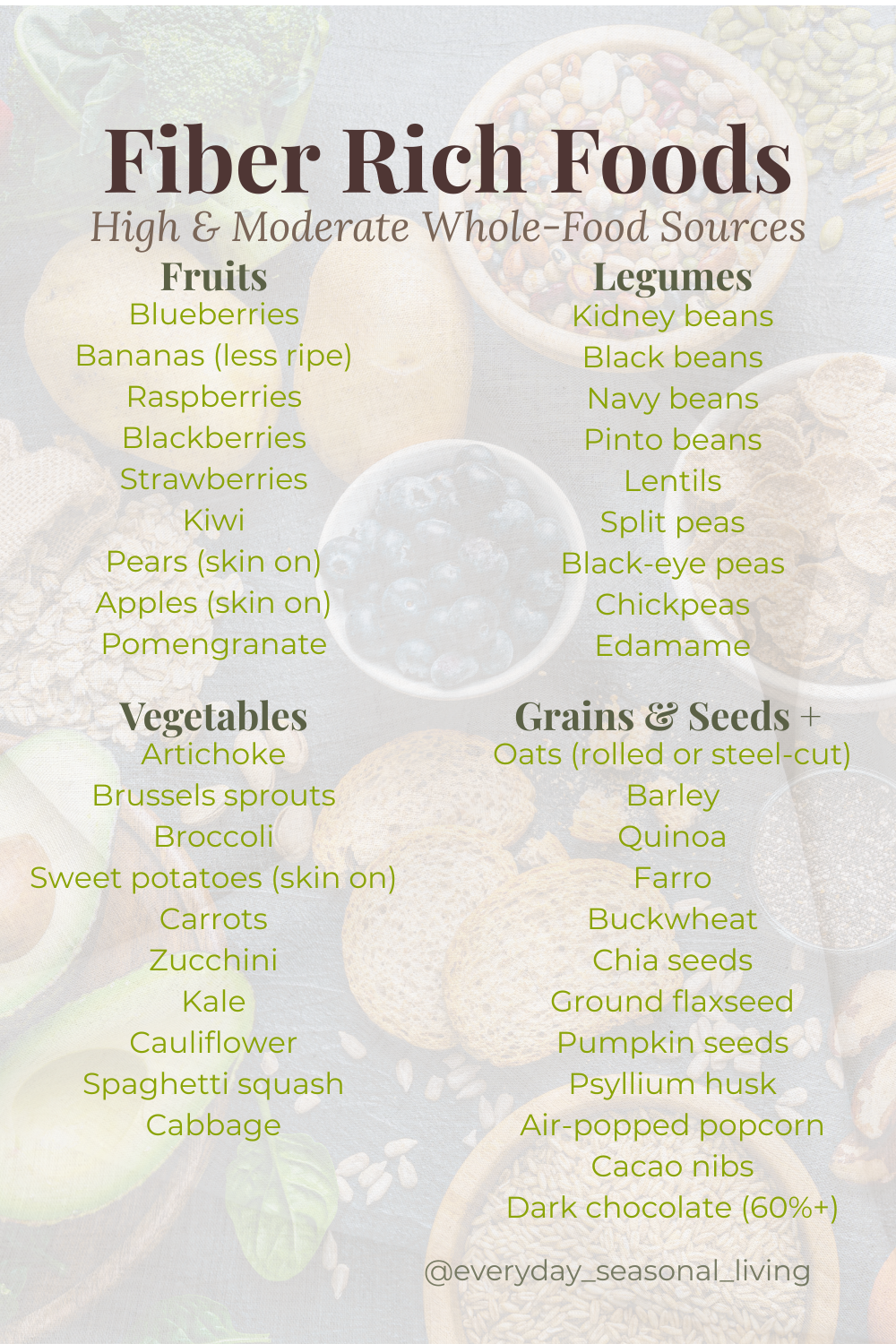
Use it when planning meals.
Not as a rulebook.
Just as a helpful reminder.
If you’re already moving your body and paying attention to your health, increasing fiber-rich whole foods is a practical next step.
Not complicated.
Not extreme.
Just supportive.
Kayla | FEB 3
Share this blog post

 OfferingTree